MTI | Medical Assisting | Allied Health Care | Trade School

Medical Assistant Course Description

Medical Assistant Program Dates
All Campuses
Start Date Graduation Date
July 23, 2012 April 12, 2013
September 24, 2012 June 14, 2013 
November 26, 2012 August 30, 2013

36 Weeks/765 Clock Hours/225 Hr Externship/36 Semester Credits/135 Additional Outside Clock Hours

The Medical Assisting (MA) student will be trained to perform at a minimum entry level in positions normally available in a medical facility such as physicians’, chiropractors’, or podiatrists’ offices and clinics.

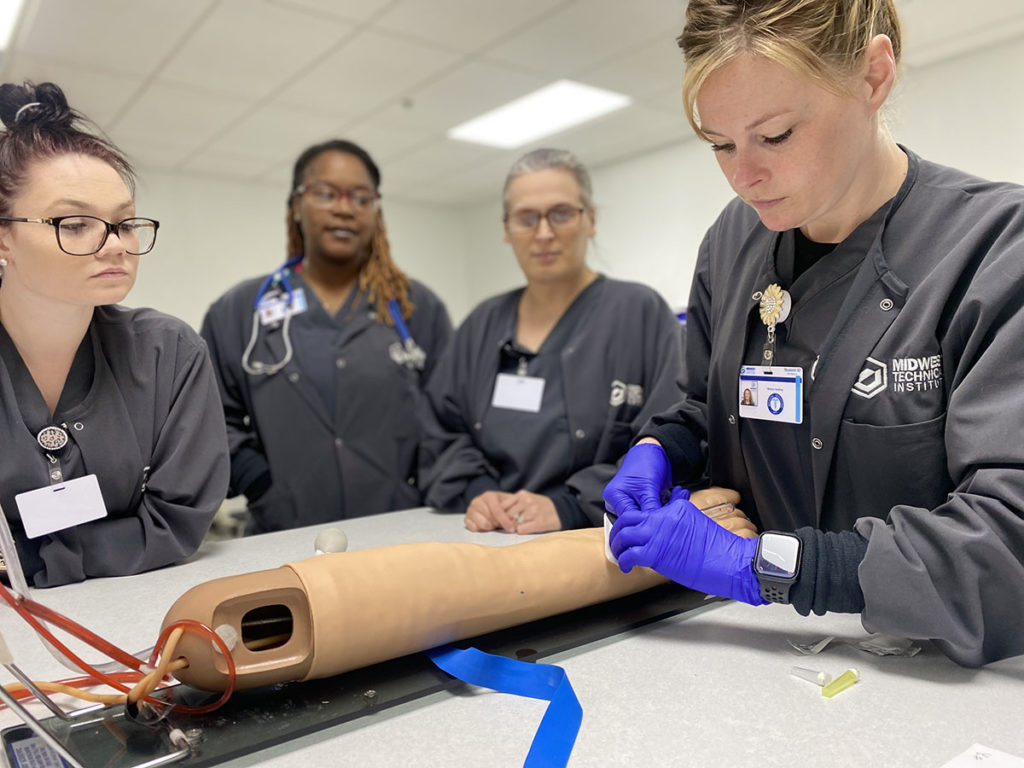
The program provides the MA with entry-level theory and limited “hands-on” training in basic and routine clinical and office tasks. This will equip the MA with the competencies required to perform in either a clinical or office capacity. The graduate will be able to assist in EKG, X -ray procedures, first aid, and phlebotomy.

He/She will be able to perform clinical procedures, preparing the patient for physical exams, and assisting the physician with other exams. The MA may help the physician with minor surgical procedures and can sterilize and care for instruments. In some venues, the MA is expected to effectively handle administrative office procedures such as keyboarding, billing, coding, scheduling, transcription, insurance claims, and computerized record keeping. The MA possesses a thorough understanding of health-related ethics and other business principles that bear on the practitioner’s relationship with the patient. As the medical profession continues to grow as a result of the population living longer and advancements in procedures, treatments, and medications, more patients will require medical services. Therefore, an increasing number of MAs will be needed to handle the many responsibilities for which they are uniquely trained.

Clinical Duties:

  • Basic Lab tests
  • EKG
  • Triage
  • Phlebotomy
  • First Aid
  • Assist in Examinations
  • Assist in Surgery

Administrative Duties:

  • Keyboarding
  • Billing
  • Coding
  • Transcription
  • Record Keeping
  • Administer Medications
  • Charting

Course Subject Descriptions Are As Follows:

(click on course title for full catalog listing)


Module 1

MED 101. Clinical Procedures I

15 clock hours/ lecture/30 lab/2 credits/11.25 additional outside clock hours

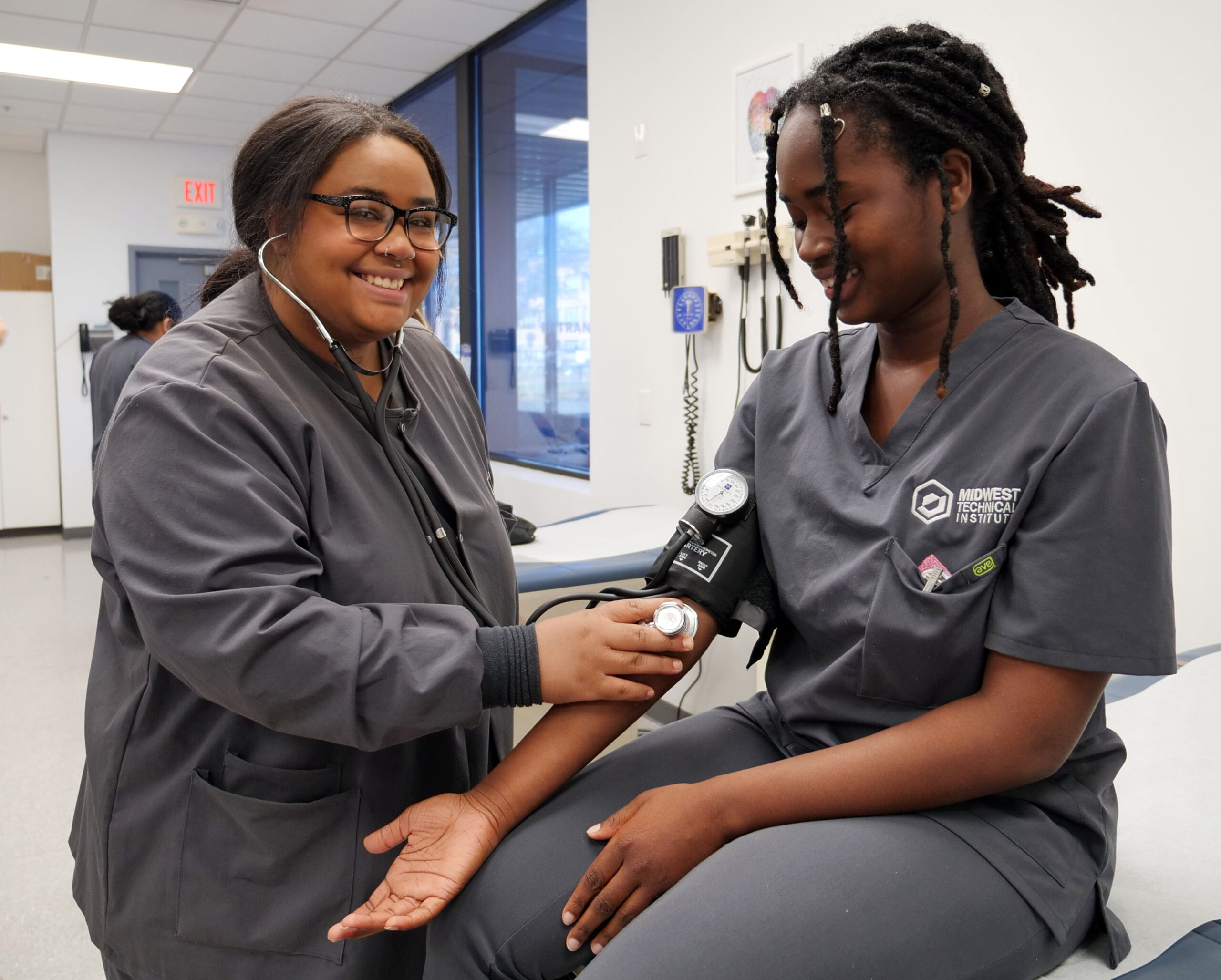
This course includes a survey of medical assisting occupations and their education and certification requirements. The course is designed to furnish the student with both theory and practical applications of medical assisting basics, including infection control; taking a temperature, pulse, respiration, and blood pressure; assisting with medical specialties; visual and auditory acuity; assisting with examinations of the eye and ear; and learning about x-ray procedures and safety precautions relating to the procedures.


MED 121. Anatomy, Physiology & Medical Terminology I

45 clock hours/lecture/3 credits/11.25 additional outside clock hours

This course familiarizes the student with human anatomy and physiology and medical terminology. The course covers the tissues and organs that make up the body systems. Body systems, functions, and diseases, including symptoms, diagnostic tests, treatments, and medications are discussed.


COA 104. Computer Keyboarding

15 clock hours/lecture/30 lab/2 credits/11.25 additional outside clock hours

Virtually every career includes keyboarding skills.  This is a skill that provides access to critical information.  Medical facilities everywhere have expectations that their staff will have the ability to type an average of 30 wpm.  In this course, students will learn general keyboarding with timed writings for speed and accuracy.  Techniques and meaningful practice are offered in lab sessions.


MED 251. Pharmacology I

45 clock hours/lecture/3 credits/11.25 additional outside clock hours

Presentation of the principles of pharmacology relating to the medical assisting profession is at the core of this course.  Emphasis is placed on correlation of drug therapy and pathophysiologic conditions, patient education regarding medications, and researching drugs using a drug reference.  The course includes the use, action, side effects, contraindications, and routes of administration of drugs most commonly administered in the medical office.  It also includes familiarization with the most commonly prescribed drugs, their dosages, how to figure dosages correctly, and drug preparation.

BACK TO TOP


Module 2

MED 102. Clinical  Procedures II

15 clock hours/ lecture/30 lab/2 credits/11.25 additional outside clock hours

During these nine weeks, the student will learn how to assist with the physical exam.  The student will become proficient in 12-lead EKG hook-ups and troubleshooting.  Students will learn to differentiate between normal and abnormal EKGs and will learn to recognize the most commonly occurring major arrhythmias.  They will also perform a pulmonary function test, urinalysis, and learn how to assist with minor surgeries.  The topic of medication administration will also be covered, as well as assisting with reproductive and urinary specialties.


MED 122. Anatomy, Physiology & Medical Terminology II

45 clock hours/lecture /3 credits/11.25 additional outside clock hours

This course familiarizes the student with human anatomy, physiology, and medical terminology.  This course covers the tissues and organs that make up each body system.  Body systems, functions, and diseases, including symptoms, diagnostic tests, treatments, and medications are discussed.


MED 211. Medical Office Procedures I
30 clock hours/lecture/15 lab/2.5 credits/11.25 additional outside clock hours

Materials for this course are chosen with the goal of providing a “real life” office simulation experience for the students.  Students will feel as though they are a member of a real office environment.  Students will learn about the office environment and patient reception.  Simulations are offered in setting up patient files, scheduling patients, and transcribing.  In this era of electronic medical records (EMR), the use and importance of it will be discussed as well as HIPAA Compliance with regard to EMRs.  All of these are a vital part of an office environment, and students will need to learn that flexibility of job duties is of utmost importance.


MED 252. Pharmacology II

45 clock hours/lecture/3 credits/11.25 additional outside clock hours

This will focus on drugs used for specific systems, studying each system separately.  Drugs are studied by students becoming familiar with side effects, actions, contraindications, routes of administration, and other factual data about the drugs.  There is an emphasis on correctly spelling drug names. 

BACK TO TOP


Module 3

MED 203. Clinical Procedures III

15 clock hours/lecture/30 lab/2 credits/11.25 additional outside clock hours

The student will begin to learn about work with the laboratory tasks routinely performed in the medical facility.  An introduction into the collecting and handling of specimens for testing, both at a facility and at an outside laboratory, are covered.  Microbiological principles will be discussed as well as hematology, including venipuncture. Assisting with the life specialties, physical therapy, and patient education are also covered in this module. 


MED 212. Medical Office Procedures II

30 clock hours/lecture/15 lab/2.5 credits/11.25 additional outside clock hours

This course familiarizes the student with all aspects of the insurance industry relative to the medical office.  Fees, billing, collections, and credit as well as financial management in the medical office will be discussed.  Insurance coding (CPT and ICD-9 coding), employability skills, resume writing, interview skills, an introduction to medical transcription, proofreading skills, punctuation, and spelling exercises are incorporated into this course.  These duties are essential to the success of the medical assistant in the administrative roll.


ENG 110. Communications

45 clock hours/lecture/3 credits/11.25 additional outside clock hours

The expectation of MTI students to be professional in every situation is high.  Students learn to act as professionals through role play and class interactions and assignments.  Students are graded on their classroom participation as a major portion of their grade.  Students learn to effectively communicate with each other and apply it to the workplace setting.  Each student will be introduced to the importance and practice of effective public speaking.


PSY 101. Psychology/Ethics

45 clock hours/lecture/3 credits/11.25 additional outside clock hours

It is imperative that the ambulatory care employee have knowledge of medical law, ethics and bioethics so that the client may be treated with understanding, sensitivity, and compassion.  The goal is to provide students with education involving ethical and legal responsibilities so that they may better serve the ambulatory care provider.  Law and ethics will be the focus of discussion.  The student will have an understanding of the chronic and acutely ill mental health patient.  The student will learn about the most common psychiatric disorders and conditions and be familiar with their signs and symptoms, treatments, and the role of the MA with a mental health patient.

BACK TO TOP


Module 4

MED 291. Externship

225 externship hours/5 credits

In the third module, students will meet with their respective externship coordinator to begin planning their externships. The externship is required for all students and must be completed to be eligible for graduation and to receive their diploma. To qualify for the externship phase of the program, a student must first have met the 2.0 G.P.A. or re-taking a subject, a score of 70% or above on the Comprehensive Class Room Final Exam and have an overall attendance of 90% in his or her medical courses.  All work is performed under the direct supervision of licensed medical personnel at the site in cooperation with MTI’s respective externship coordinator. Externs are not entitled to compensation.

Student will be scheduled for 180 hours at an extern site that has an externship agreement with MTI.  MTI currently has externship site agreements in place, and those sites have agreed to host medical assisting students.  Externs are not entitled to compensation.

BACK TO TOP


Current sites with agreements at the Springfield Campus are:

Bromenn Health Care (Medical Hills, Health Point, Sugar Creek Associates, Sugar Associates (Adult & Pediatric Medicine, Carle Clinic),The Arthritis Center, Dr. Michael Bova, Cass County Health Department, CHIC Clinic, Central Counties Health Counties, Inc., Central Illinois Kidney & Dialysis, DaVita Dialysis (Springfield, Taylorville, Jacksonville, and Decatur), OSF-Bloomington, OSF-St. Joseph Medical Center-Bloomington, OSF-2000 Fort Jesse Road, OSF-Pulmonary-Bloomington, OSF-Morton, OSF-Clinton Family Practice, OSF-Heyworth Office, Clinton Internal Medicine, Memorial Health System (Family Medical Center-Lincoln, Family Medical Center-Chatham, Menard Medical Center-Petersburg, Koke Mill Medical Associates), Memorial Medical Center (ER, AM Admit, MSH Express Care-North, South, Koke Mill, MSH-Capitol Health Care, Jacksonville Medical Associates, Jacksonville Family Practice,  Springfield Clinic-Main Campus (SC), Internal Medicine, Allergy & Immunology, Dermatology and ENT, Ophthalmology, Springfield Clinic First-Urology, Springfield Clinic MOHA (Springfield and Jacksonville), Springfield Clinic-St. John’s Pavilion, Plastic Surgery, Sherman Family Practice (SC), Gastroenterology, Springfield Clinic Family Practice, Lincoln Healthcare Specialties (SC), Family Medical Care (SC)-Decatur, Christian County Medical Clinic (SC), Jacksonville Family Health Care (SC), Dr. Darr Leutz (SC), Wabash Medical Center (SC), SIU School of Medicine-Bayliss Building-ENT, GIM, Pulmonary, Dermatology, Neurology, Plastics, ID, Endo, MOHS, Adult Ortho, Surgery, Vascular, St. John’s Pavilion-Surgery, Pediatrics, Urology, Pedi-Ortho, ENR, Carol Jo Vecchie (SIU), SIU Hematology/Oncology, Family Center for Medicine (SIU), Decatur Memorial Hospital Clinic (DMH)-West Hay Medical, Express Care North, Illinois Heart Specialists, Corporate Health, Midwest Neurology, Kidney Specialists of Illinois, Enta Institute, Infectious Disease Specialists, Dr. McCormack’s Office, South Shores Medical Center, Arthur Medical Center, SIU Family Practice of Decatur, Dr. Rao Morisetty (OB/GYN), Mt. Zion Family Care Center-Dr. Smith, Dr. Ballard, Dr. Castersian, Optimal Chiropractic: A Wellness Center, Orthopedics Center of Illinois, Physicians Group Associates, Prairie Podiatry, St. Mary’s Family Medicine (formerly Rock Springs), Renew Total Body Wellness Center-Dr. Thomas Rohde, Sangamon County Pain Center, Dr. Mark Savage (Jacksonville and Virginia), Dr. Glen Weisgerber, and Dr. Paul Venturini.  Externship schedules will be arranged with input from the primary instructor and student.


Current sites with agreements at the East Peoria Campus are:

ACPM Podiatry, Boyd Obstetrics & Gynecology, Bromenn Health Care, Couri/Teverbaugh OB/Gyn, Dr. Harrington OB/Gyn, Heart Care Midwest (Pekin), Heartland Community Clinic, IWIRC, Illinois Cancer Care, Medical Hills Internists, Midwest Urological Group, North Peoria Internal Medicine, OSF (Carle) Bloomington, OSF Medical Group-Internal Medicine, OSF Bloomington, OSF-St. Joseph Med Ctr.-Bloomington, OSF-Bloomington, OSFMG-Chillicothe, OSF Medical Group Galesburg, OSF Medical Group Morton, OSF Medical Group Peoria, Internal Medicine/Peds, OSF-Pulmonary, OSF Washington, Pekin Family Practice-Dr. Fisher, Peoria Surgical Group, Proctor First Care, Proctor First Care (Peoria Heights, North Peoria, East Peoria, Morton), Proctor Medical Group (Chillicothe, Lacon, Peoria), Tazwood Mental Health Center, Tremont Medical Clinic, University of Illinois College ofMedicine-Peoria/CHOI at OSF Saint Francis Medical Center, and University of Illinois College of Medicine-Peoria/CHOI.  Externship schedules will be arranged with input from the primary instructor and student.


Additional Requirements:

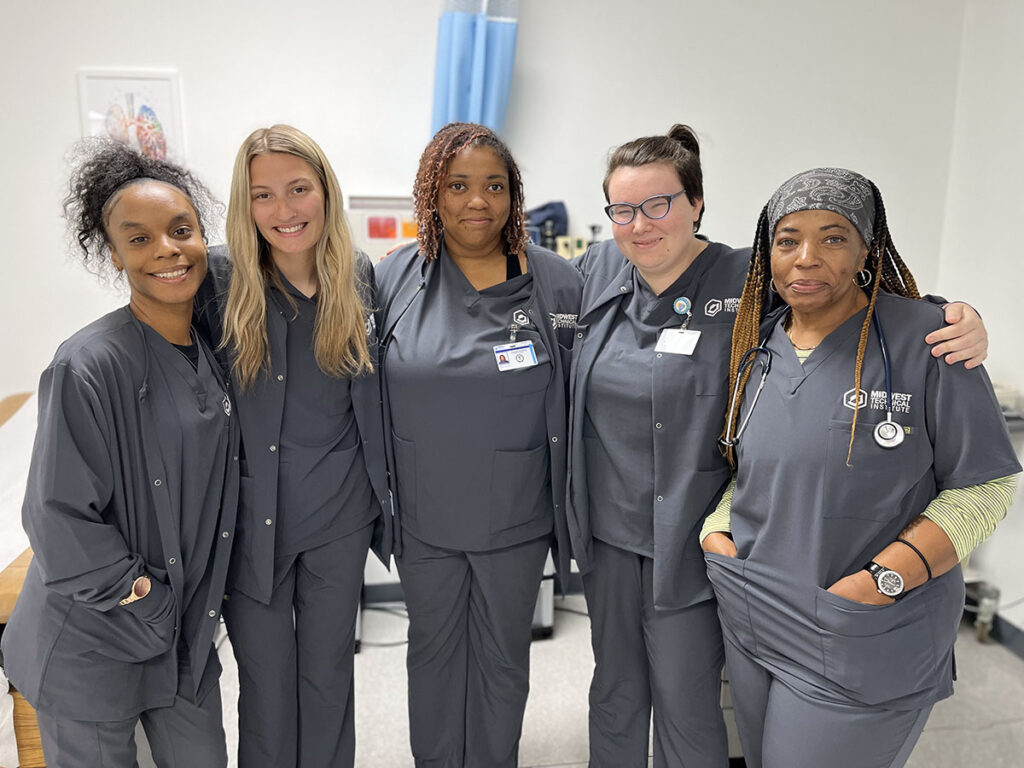
Upon successful completion of all coursework through the 27th week, one complete uniform will be supplied including scrub pants, scrub top, and lab coat with patch and name badge. Students will be able to purchase additional uniforms as desired. Each student will also be provided the Hep B Vaccine, if needed, beginning in the first 9 weeks of class. Students will be asked to provide their own white shoes (clean, with no writing) as well as a watch with a second hand.

BACK TO TOP